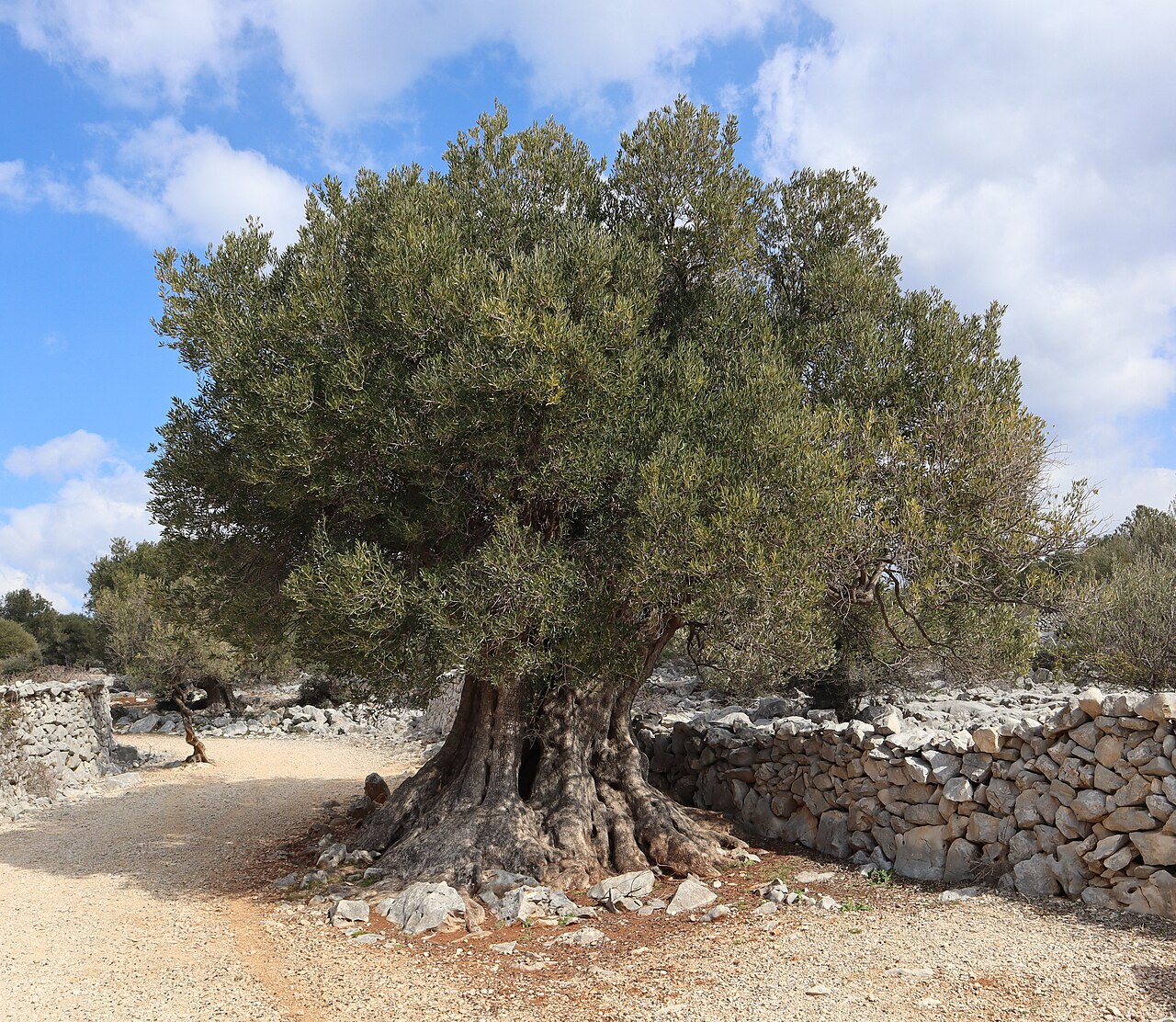
Trees run through the Bible from its first chapters to its last. The tree of life stands in the middle of Eden in Genesis 2 and again beside the river of the water of life in Revelation 22. In between, an olive leaf tells Noah the flood is over, Solomon builds the temple with cedars from Lebanon, a crowd waves palm branches as Jesus enters Jerusalem, and a fig tree with nothing but leaves withers at his word.
Like birds, trees don’t carry one fixed meaning everywhere they appear. A tree in a psalm about the righteous does different work than a tree in a food story or a temple-building list. This guide walks through the main trees of the Bible, what the key verses actually say, and how to read their symbolism without stretching the text.
The quotations below are from the King James Version, a public-domain English translation, checked against a public KJV text in November 2026. Other translations sometimes use different English names for the same trees (for example, “acacia” for the KJV’s “shittim wood”), so the names here follow the KJV.
What do trees symbolize in the Bible?
Most of the time, a biblical tree pictures life as either rooted and fruitful or cut off and barren. A few big patterns show up again and again:
- Life with God. The tree of life appears in Eden (Genesis 2:9) and in the new creation (Revelation 22:2).
- The person who trusts the Lord. Psalm 1:3 and Jeremiah 17:7-8 both compare that person to a tree planted by water.
- Fruit as evidence. Jesus says, “by their fruits ye shall know them” (Matthew 7:20).
- Specific trees with specific roles. The olive, fig, cedar, palm, and almond each show up in their own memorable scenes.
The safest way to read any tree in Scripture is to start with the verse and its chapter, then ask what the writer is using the tree to say.
Trees of the Bible at a glance
| Tree (KJV name) | Key passages | What the passage is doing |
|---|---|---|
| Tree of life | Genesis 2:9; Genesis 3:22-24; Proverbs 3:18; Revelation 2:7; Revelation 22:2 | Life in God’s presence; access lost in Eden and restored in the new creation; wisdom as “a tree of life” |
| Tree of the knowledge of good and evil | Genesis 2:9; Genesis 2:16-17 | The one tree Adam is commanded not to eat from |
| Olive | Genesis 8:11; Psalm 52:8; Judges 9:8-9; Zechariah 4:3, 11-14; Romans 11:17-24 | The flood’s end; a flourishing worshiper; the two anointed ones; grafted branches |
| Fig | Genesis 3:7; Micah 4:4; John 1:48; Mark 11:13-14, 20-21; Luke 13:6-9; Matthew 24:32 | Fig-leaf aprons; peace and security; a fruitless tree; a lesson about reading the times |
| Cedar | 1 Kings 5:6; Psalm 92:12; Ezekiel 17:22-24 | Temple timber; the growth of the righteous; a planted twig that becomes a great tree |
| Palm | Leviticus 23:40; Judges 4:5; Psalm 92:12; John 12:13; Revelation 7:9 | Festival joy; Deborah’s seat of judgment; welcome of the King; the multitude before the throne |
| Almond | Numbers 17:8; Jeremiah 1:11-12 | Aaron’s rod that budded; the Lord watching over his word |
| Other trees | Exodus 25:10; Exodus 15:25; 1 Kings 19:4; Luke 19:4; Matthew 13:31-32 | Shittim wood for the ark; the tree that sweetened Marah; Elijah’s juniper; Zacchaeus’ sycomore; the mustard seed |
The tree of life and the tree of knowledge
Two trees in Eden
Genesis 2:9 says the Lord God made every tree grow that is “pleasant to the sight, and good for food; the tree of life also in the midst of the garden, and the tree of knowledge of good and evil.” Only one tree is forbidden. In Genesis 2:16-17 the Lord says, “Of every tree of the garden thou mayest freely eat: But of the tree of the knowledge of good and evil, thou shalt not eat of it.”
After the man and woman eat, the Lord sends them out of the garden “lest he put forth his hand, and take also of the tree of life, and eat, and live for ever” (Genesis 3:22). Cherubim and “a flaming sword which turned every way” are placed “to keep the way of the tree of life” (Genesis 3:24).
The tree of life restored
The Bible doesn’t leave the tree of life behind in Eden. Jesus promises in Revelation 2:7, “To him that overcometh will I give to eat of the tree of life, which is in the midst of the paradise of God.” And in Revelation 22:2, the tree of life stands on either side of the river, bearing “twelve manner of fruits,” and “the leaves of the tree were for the healing of the nations.” The way that was guarded in Genesis is open again at the end of the story.
Wisdom as a tree of life
Proverbs borrows the same image for wisdom: “She is a tree of life to them that lay hold upon her: and happy is every one that retaineth her” (Proverbs 3:18).
The righteous person as a tree
Two passages use almost the same picture. Psalm 1:3 says the person who delights in the law of the Lord “shall be like a tree planted by the rivers of water, that bringeth forth his fruit in his season; his leaf also shall not wither.” Jeremiah 17:7-8 says the man who trusts in the Lord “shall be as a tree planted by the waters, and that spreadeth out her roots by the river,” one that “shall not be careful in the year of drought, neither shall cease from yielding fruit.”
Both emphasize where the tree is planted. Its strength comes from the water it is rooted beside, not from the tree itself. Isaiah 61:3 adds that the Lord’s comforted people “might be called trees of righteousness, the planting of the LORD, that he might be glorified.”
Olive tree
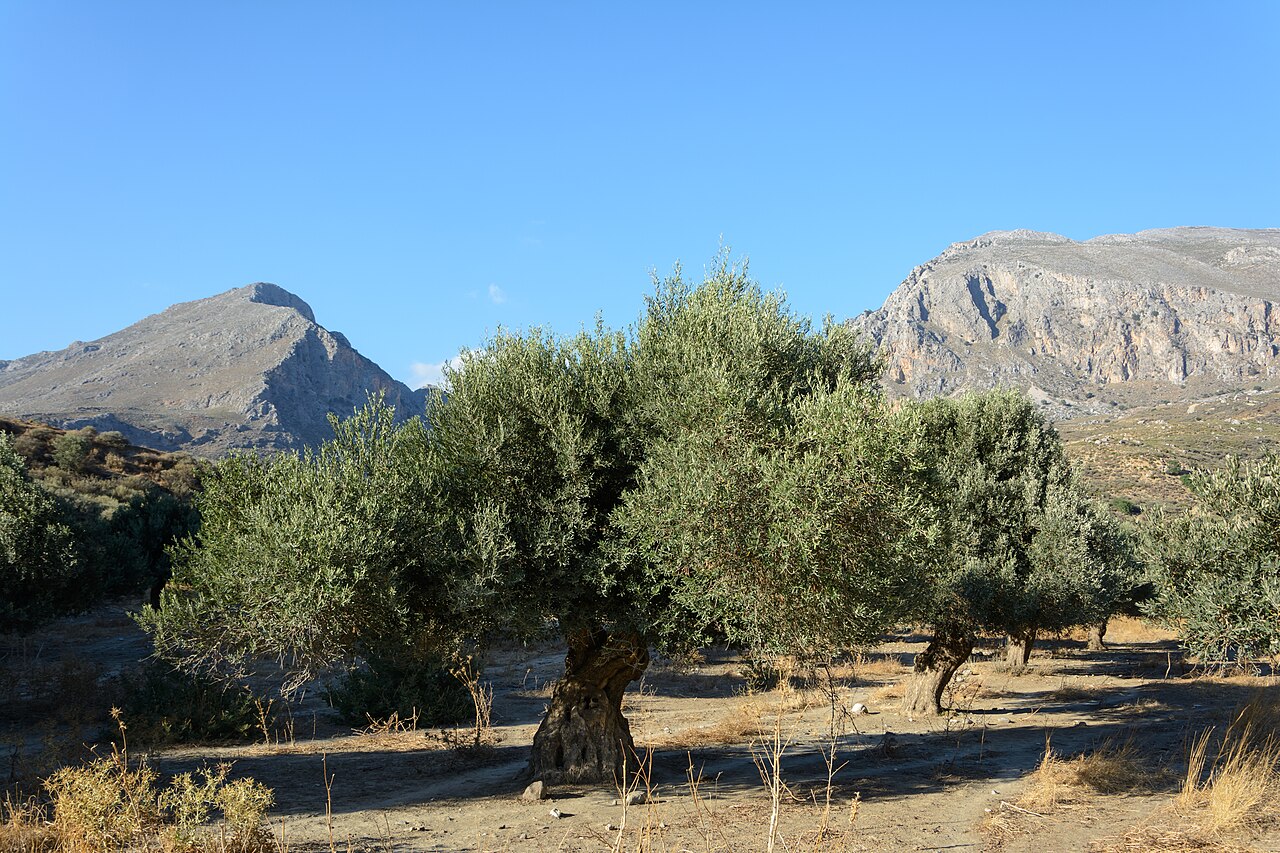
Noah’s olive leaf
When the dove returns to the ark, “lo, in her mouth was an olive leaf pluckt off: so Noah knew that the waters were abated from off the earth” (Genesis 8:11). In the text, the leaf is a sign that the land is drying out. The later use of the olive branch as an emblem of peace is a tradition built on this scene, not a sentence in the verse. You can read more about the dove’s role in BibleLift’s guide to birds in the Bible and their meaning.
“A green olive tree in the house of God”
David writes, “But I am like a green olive tree in the house of God: I trust in the mercy of God for ever and ever” (Psalm 52:8). Like Psalm 1, the flourishing tree is tied to trust in God.
The olive in Jotham’s fable
In Judges 9:8-9, the trees go out to anoint a king and ask the olive tree first. It declines: “Should I leave my fatness, wherewith by me they honour God and man, and go to be promoted over the trees?” The olive is valued for its oil, used to honor both God and people.
Two olive trees and grafted branches
Zechariah sees “two olive trees” beside a golden candlestick (Zechariah 4:3). When he asks what they are, he is told, “These are the two anointed ones, that stand by the LORD of the whole earth” (Zechariah 4:14).
In the New Testament, Paul uses an olive tree to explain how Gentile believers relate to Israel. He tells a Gentile reader, “thou, being a wild olive tree, wert graffed in among them, and with them partakest of the root and fatness of the olive tree” (Romans 11:17), and he says the natural branches can be “graffed into their own olive tree” again (Romans 11:24).
Fig tree
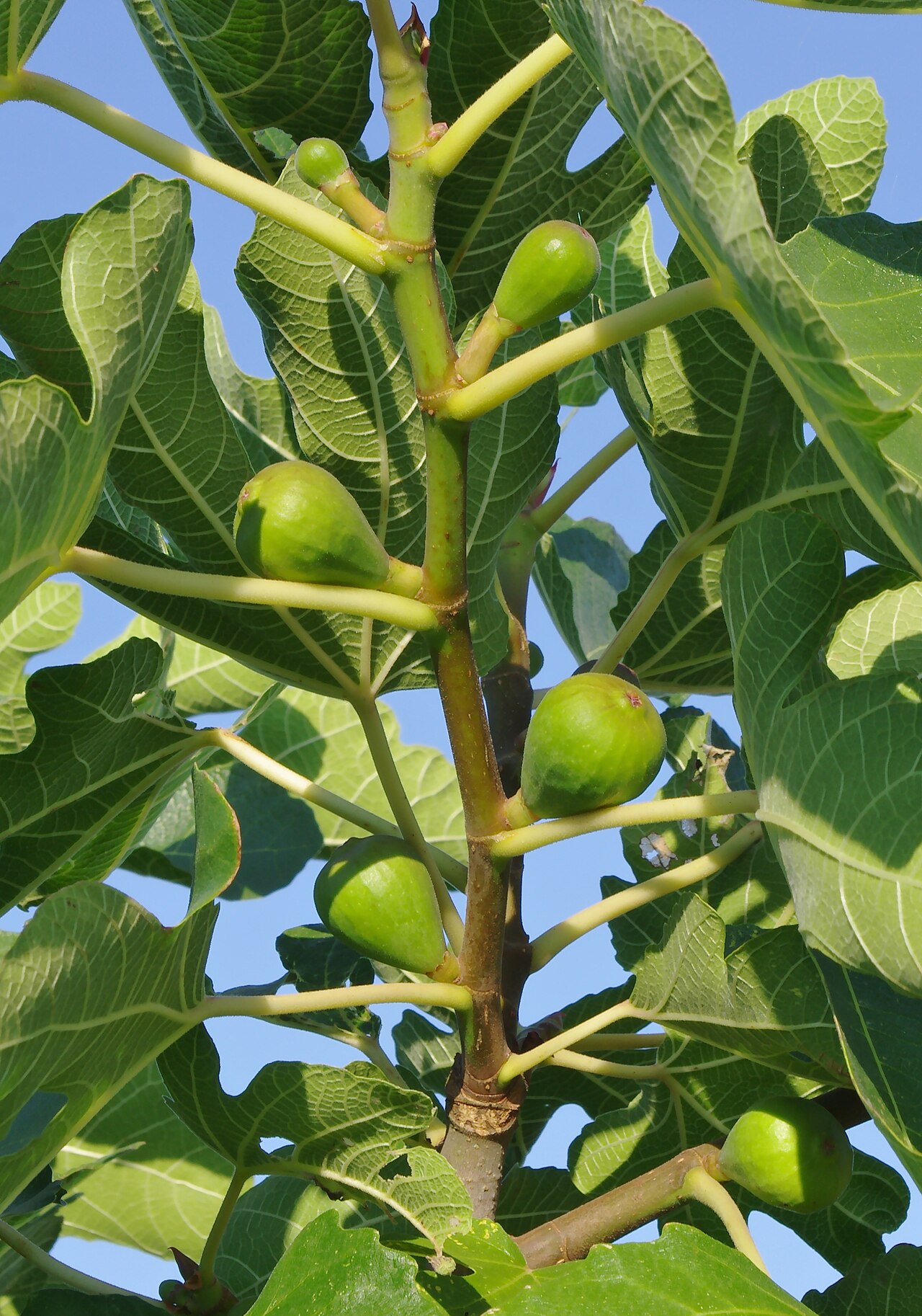
Fig leaves in Eden
The first tree named after the fall is the fig. Once their eyes are opened, Adam and Eve “sewed fig leaves together, and made themselves aprons” (Genesis 3:7).
Under the vine and fig tree
Micah’s picture of peace is simple: “they shall sit every man under his vine and under his fig tree; and none shall make them afraid” (Micah 4:4). Sitting under your own fig tree pictures security. In John 1:48, Jesus tells Nathanael, “when thou wast under the fig tree, I saw thee.”
The fig tree Jesus cursed
Mark 11:13 says Jesus saw a fig tree “having leaves” and found “nothing but leaves; for the time of figs was not yet.” He said, “No man eat fruit of thee hereafter for ever.” The next morning the disciples saw it “dried up from the roots,” and Peter said, “Master, behold, the fig tree which thou cursedst is withered away” (Mark 11:20-21). Matthew 21:19 records that the tree withered “presently.”
In Mark, this account wraps around Jesus’ visit to the temple, so many readers connect a tree full of leaves but empty of fruit with outward religion that bears no fruit. That reading comes from how the passage is arranged, so it is best held as an interpretation, not as something the verses state outright.
The barren fig tree and the lesson of the fig tree
In Luke 13:6-9, a man looks for fruit on his fig tree for three years and finds none. The dresser of the vineyard asks for one more year to “dig about it, and dung it,” and only then cut it down if it still bears no fruit. It is a parable of both patience and a real deadline. For more on reading Jesus’ stories, see Studying the Parables of Jesus.
Jesus also says, “Now learn a parable of the fig tree; When his branch is yet tender, and putteth forth leaves, ye know that summer is nigh” (Matthew 24:32). Here the fig tree is a sign that helps people read the times.
Cedar of Lebanon
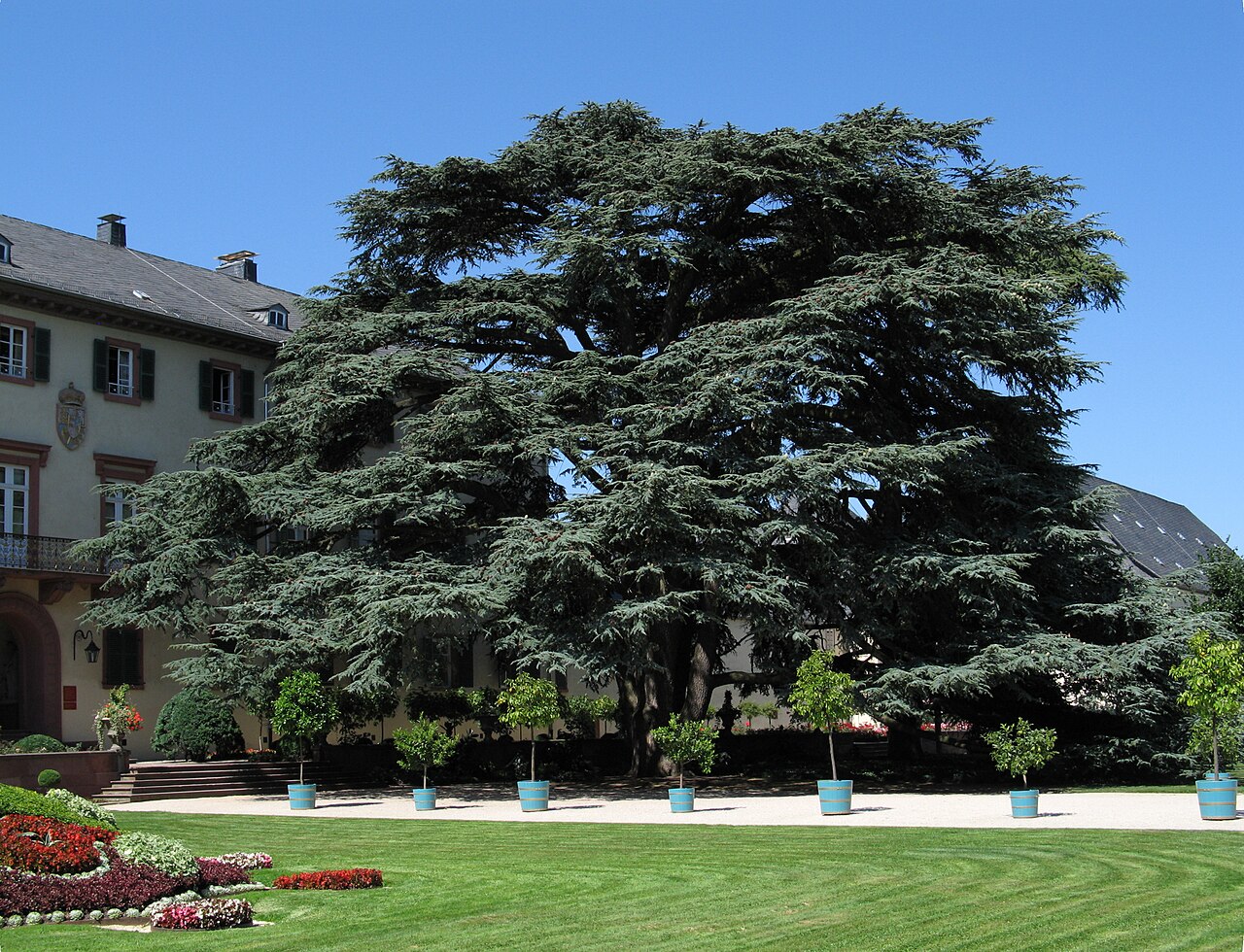
Cedar was the premium building timber of the Old Testament. Solomon asks Hiram, king of Tyre, to “hew me cedar trees out of Lebanon” for the temple (1 Kings 5:6).
Psalm 92:12 uses the cedar for steady growth: “The righteous shall flourish like the palm tree: he shall grow like a cedar in Lebanon.” And in Ezekiel 17:22-24, the Lord takes “a tender one” from the top of a high cedar and plants it “upon an high mountain.” It grows into “a goodly cedar,” and “under it shall dwell all fowl of every wing.” The passage ends with the Lord saying he has “brought down the high tree” and “exalted the low tree.”
Palm tree
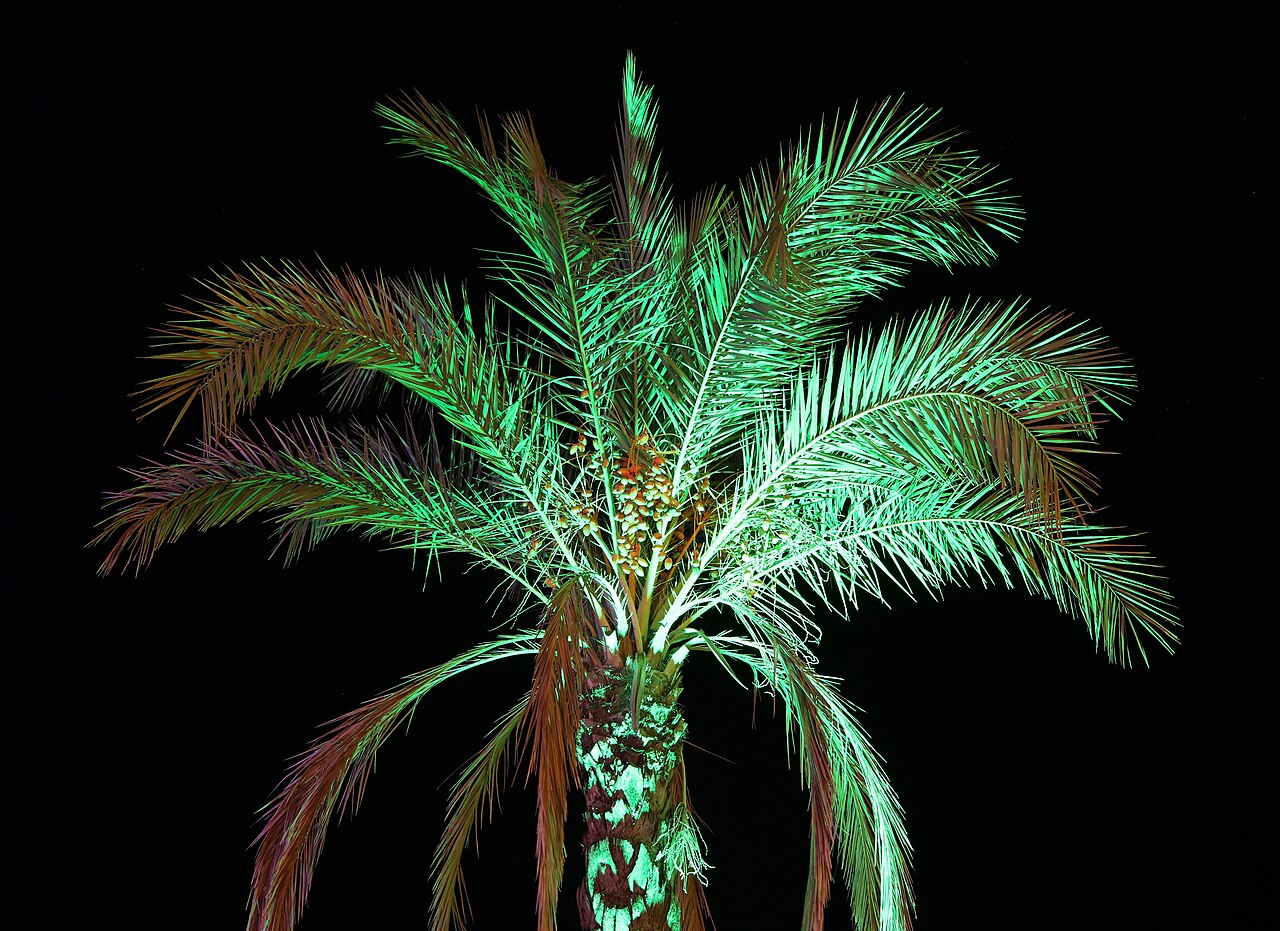
Palm branches are part of joyful worship in the Old Testament. For the feast of tabernacles, Israel is told to take “branches of palm trees” and other boughs, “and ye shall rejoice before the LORD your God seven days” (Leviticus 23:40). If you’d like to go further, see Tips for Studying the Feasts of Israel.
The prophetess Deborah “dwelt under the palm tree of Deborah between Ramah and Bethel,” and Israel came to her there for judgment (Judges 4:5).
In the Gospels, when Jesus comes to Jerusalem, the crowd “took branches of palm trees, and went forth to meet him, and cried, Hosanna: Blessed is the King of Israel that cometh in the name of the Lord” (John 12:13). In Revelation 7:9, John sees “a great multitude, which no man could number,” standing before the throne “clothed with white robes, and palms in their hands.”
Almond tree
Aaron’s rod that budded
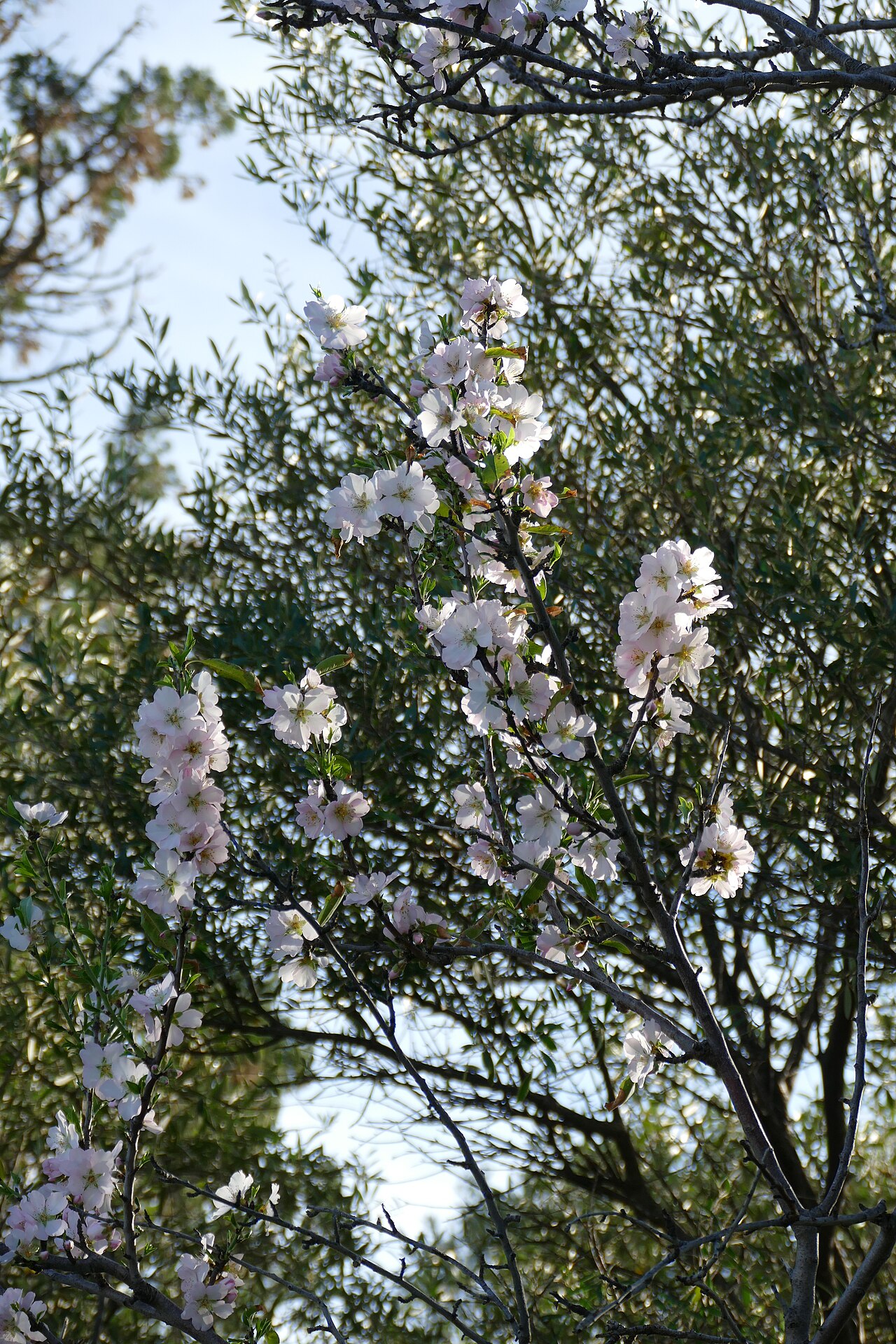
When the Lord settles the question of who will serve as priest, Aaron’s rod is placed in the tabernacle. The next day it “was budded, and brought forth buds, and bloomed blossoms, and yielded almonds” (Numbers 17:8).
Jeremiah’s almond branch
At Jeremiah’s call, the Lord asks what he sees. Jeremiah answers, “I see a rod of an almond tree,” and the Lord replies, “Thou hast well seen: for I will hasten my word to perform it” (Jeremiah 1:11-12). The point of the vision is the Lord’s faithfulness to carry out his word.
Other notable trees and wood in the Bible
- Shittim wood. The ark of the covenant is made of “shittim wood” (Exodus 25:10). Many modern translations render this wood as acacia.
- The tree at Marah. When the water at Marah is bitter, “the LORD shewed him a tree, which when he had cast into the waters, the waters were made sweet” (Exodus 15:25).
- The juniper tree. Worn out and afraid, Elijah “sat down under a juniper tree” and asked to die (1 Kings 19:4). God then provides for him in the verses that follow.
- The sycomore tree. Zacchaeus, too short to see over the crowd, “climbed up into a sycomore tree to see him” (Luke 19:4).
- The oak. Rebekah’s nurse Deborah “was buried beneath Bethel under an oak,” named Allon-bachuth (Genesis 35:8).
- The mustard seed. Jesus says the kingdom of heaven is like a grain of mustard seed that, “when it is grown, it is the greatest among herbs, and becometh a tree, so that the birds of the air come and lodge in the branches thereof” (Matthew 13:31-32).
The cross as a “tree”
The New Testament sometimes calls the cross a tree. Peter tells the council that God raised Jesus, “whom ye slew and hanged on a tree” (Acts 5:30). Paul writes, “Christ hath redeemed us from the curse of the law, being made a curse for us: for it is written, Cursed is every one that hangeth on a tree” (Galatians 3:13), quoting Deuteronomy 21:23. And Peter writes that Christ “his own self bare our sins in his own body on the tree” (1 Peter 2:24).
So the Bible’s tree story runs from a forbidden tree in Eden, through the tree on which Christ bore sin, to the tree of life whose leaves heal the nations.
Known by their fruit
Jesus’ most direct tree teaching is about fruit: “every good tree bringeth forth good fruit; but a corrupt tree bringeth forth evil fruit… Wherefore by their fruits ye shall know them” (Matthew 7:17-20). He repeats it in Matthew 12:33, “the tree is known by his fruit,” and in Luke 6:44, “every tree is known by his own fruit.” For a practical next step, see How to Apply the Fruits of the Spirit in Daily Life.
How to read tree symbolism without stretching the text
- Start with the verse. Read the whole chapter before deciding what a tree “means.”
- Let the writer say it. Psalm 1 and Jeremiah 17 tell you directly what the tree pictures. Where a passage doesn’t, hold your interpretation loosely.
- Separate Scripture from tradition. The olive branch as a peace emblem, for example, is a later tradition that grew out of Genesis 8:11.
- Watch translation names. Shittim and acacia, or sycomore and sycamore, can be the same tree under different English names.
Related studies on BibleLift
- Birds in the Bible and Their Meaning
- Exploring the symbolism of animals in the Bible
- Studying the Parables of Jesus
- Understanding the Miracles of Jesus
FAQ
What do trees symbolize in the Bible?
It depends on the passage. The tree of life stands for life with God in Genesis 2 and Revelation 22. A tree planted by water pictures the person who trusts the Lord in Psalm 1:3 and Jeremiah 17:7-8. Jesus uses good and corrupt trees to teach that people are known by their fruit (Matthew 7:17-20). Individual trees such as the olive, fig, cedar, palm and almond each carry their own images in their own contexts.
What is the tree of life in the Bible?
The tree of life is first named in Genesis 2:9, in the midst of the garden. After the fall, the way to it is guarded by cherubim and a flaming sword (Genesis 3:24). It returns in Revelation 2:7 and 22:2, where its leaves are “for the healing of the nations.” Proverbs 3:18 also calls wisdom “a tree of life to them that lay hold upon her.”
What does the olive tree represent in the Bible?
The dove brings Noah an olive leaf, and Noah knows the waters are abated (Genesis 8:11). The psalmist says, “I am like a green olive tree in the house of God” (Psalm 52:8). In Romans 11:17-24, Paul uses wild and cultivated olive branches to describe Gentiles being grafted in among God’s people.
Why did Jesus curse the fig tree?
Mark 11:13 says Jesus found “nothing but leaves” on the tree, and he said no one would eat fruit from it again. The next morning the disciples saw it “dried up from the roots” (Mark 11:20). In Mark, the account frames Jesus’ visit to the temple, so many readers connect the leafy but fruitless tree with outward show without fruit. Luke 13:6-9 has a related parable about a barren fig tree given one more year.
What does the cedar of Lebanon mean in the Bible?
Cedars from Lebanon were the prized timber Solomon ordered for the temple (1 Kings 5:6). Psalm 92:12 says the righteous “shall grow like a cedar in Lebanon.” In Ezekiel 17:22-24, the Lord plants a tender cedar twig on a high mountain, and it grows into a goodly cedar that shelters birds.
What do palm branches mean in the Bible?
Palm branches were part of the joyful celebration commanded in Leviticus 23:40. The crowd took branches of palm trees to meet Jesus as he entered Jerusalem (John 12:13). In Revelation 7:9, a great multitude stands before the throne with palms in their hands.
Why is the cross called a tree in the Bible?
The New Testament uses the word “tree” for the cross in Acts 5:30, Galatians 3:13 and 1 Peter 2:24. Galatians 3:13 quotes the law, “Cursed is every one that hangeth on a tree,” which comes from Deuteronomy 21:23, and says Christ was “made a curse for us.”
What does the Bible say about being known by your fruit?
Jesus says, “by their fruits ye shall know them” (Matthew 7:20), and “the tree is known by his fruit” (Matthew 12:33; see also Luke 6:43-44). The point is that what grows out of a life shows what kind of life it is.
Image credits: Featured image: ancient olive tree at Lun, Croatia, by Palauenc05, CC BY-SA 4.0, via Wikimedia Commons. Olive tree near Preveli by Uoaei1, CC BY-SA 4.0, via Wikimedia Commons. Cedar of Lebanon by Johannes Robalotoff, CC BY-SA 3.0 DE, via Wikimedia Commons. Fig tree by JLPC, CC BY-SA 3.0, via Wikimedia Commons. Date palm by George Chernilevsky, public domain, via Wikimedia Commons. Almond blossom by Kritzolina, CC BY-SA 4.0, via Wikimedia Commons.