The Bible doesn’t hand you one spiritual meaning that fits every bird in every chapter. A dove in Genesis is doing different work than a dove at Jesus’ baptism. Sparrows show up when Jesus talks about the Father’s care. Eagles appear when the Lord is pictured carrying Israel, or when people who wait on him are promised renewed strength. Ravens feed Elijah. And some hawks and other birds of prey simply turn up on a list of food Israel is not to eat.
The quotations below are from the King James Version, a public-domain English translation, checked on Bible Gateway in November 2026. Other translations sometimes use different English bird names in the same verses, especially in the clean-and-unclean lists, so the names here follow the KJV.
What do birds symbolize in the Bible?
It depends on the kind of writing you’re in. In a narrative, the bird may be part of the story itself. In the Gospels, Jesus can compare the Spirit’s descent to a dove, or point to sparrows and ravens when he teaches about God’s care. In the law, some birds are listed as food Israel may or may not eat. In poetry and prophecy, an eagle or a sparrow can be an image, not a field-guide entry.
That’s why a single catch-all “biblical meaning of birds” isn’t faithful to the text. A better question is, “What is this passage doing with this bird?”
Birds of the Bible and their meaning
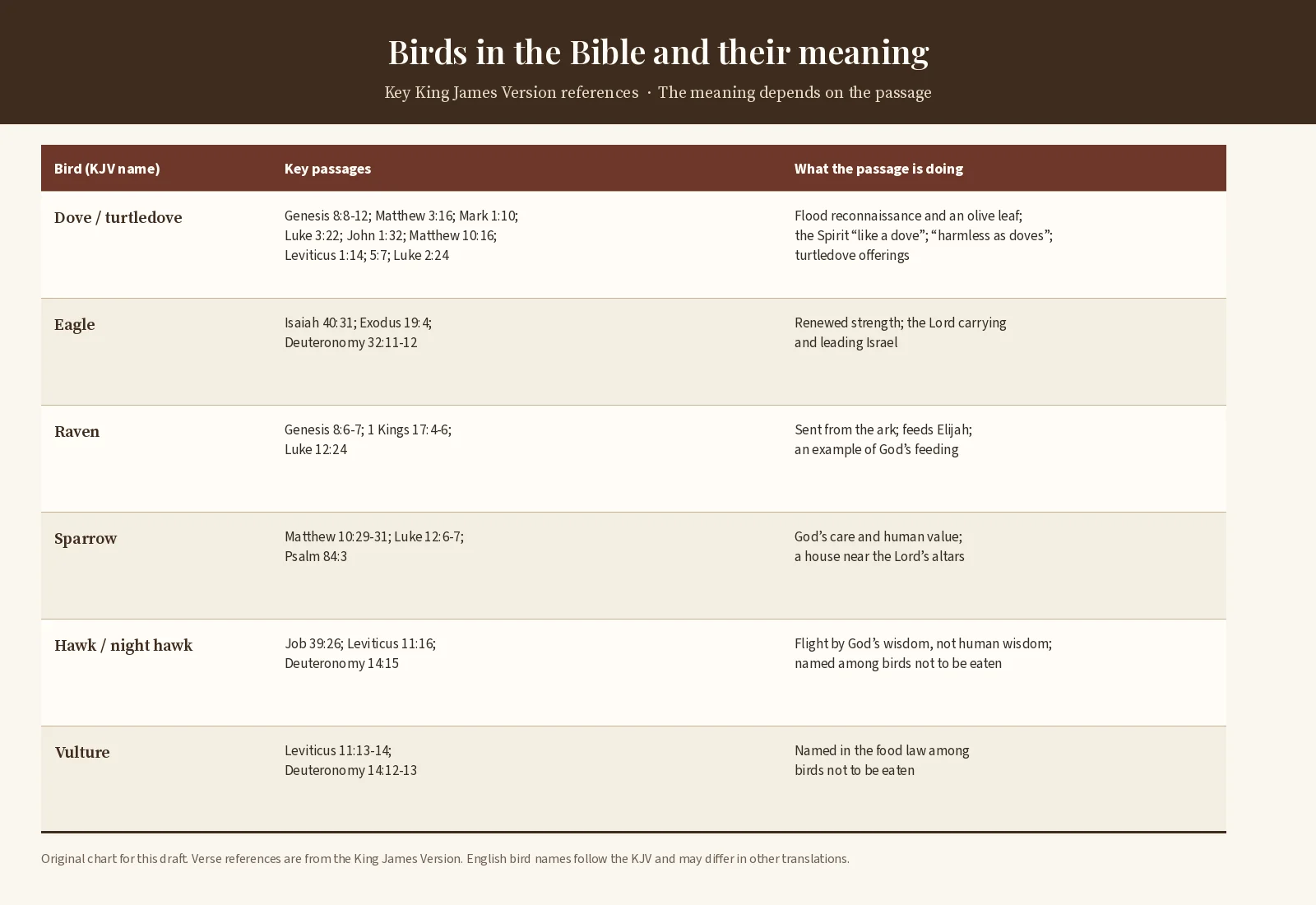
The table below is a quick index. Details and quotations follow in the sections under it. Where BibleLift already has a closer study, the last column links to that page.
| Bird (KJV name) | Key passages | What the passage is doing | Deeper post |
|---|---|---|---|
| Dove / turtledove | Genesis 8:8-12; Matthew 3:16; Mark 1:10; Luke 3:22; John 1:32; Matthew 10:16; Leviticus 1:14; Leviticus 5:7; Luke 2:24 | Flood reconnaissance and an olive leaf; the Spirit “like a dove”; “harmless as doves”; turtledove offerings | — |
| Eagle | Isaiah 40:31; Exodus 19:4; Deuteronomy 32:11-12 | Renewed strength; the Lord carrying and leading Israel | — |
| Raven | Genesis 8:6-7; 1 Kings 17:4-6; Luke 12:24 | Sent from the ark; feeds Elijah; an example of God’s feeding | — |
| Sparrow | Matthew 10:29-31; Luke 12:6-7; Psalm 84:3 | God’s care and human value; a house near the Lord’s altars | — |
| Hawk / night hawk | Job 39:26; Leviticus 11:16; Deuteronomy 14:15 | Flight by God’s wisdom, not human wisdom; named among birds not to be eaten | What Are Hawks Represented In The Bible? |
| Vulture | Leviticus 11:13-14; Deuteronomy 14:12-13 | Named in the food law among birds not to be eaten | What Is The Biblical Symbolism Of Vultures? |
A few other KJV birds can be named without inventing a separate meaning for each. Owls and the pelican appear in the unclean-bird lists (Leviticus 11:16-18; Deuteronomy 14:15-17) and in Psalm 102:6. The stork is in those lists too (Leviticus 11:19); Psalm 104:17 says the fir trees are her house, and Jeremiah 8:7 says she “knoweth her appointed times.” Quails come as food in Exodus 16:13 and again in Numbers 11:31. Job 39:13-18 describes the ostrich. In Matthew 26:34, 74-75, the cock crows as the sign Jesus named of Peter’s denial. Other KJV names in Leviticus 11:13-19 and Deuteronomy 14:11-18 include the ossifrage, ospray, kite, cuckow, cormorant, swan, gier eagle, heron, lapwing, and the bat.
Dove
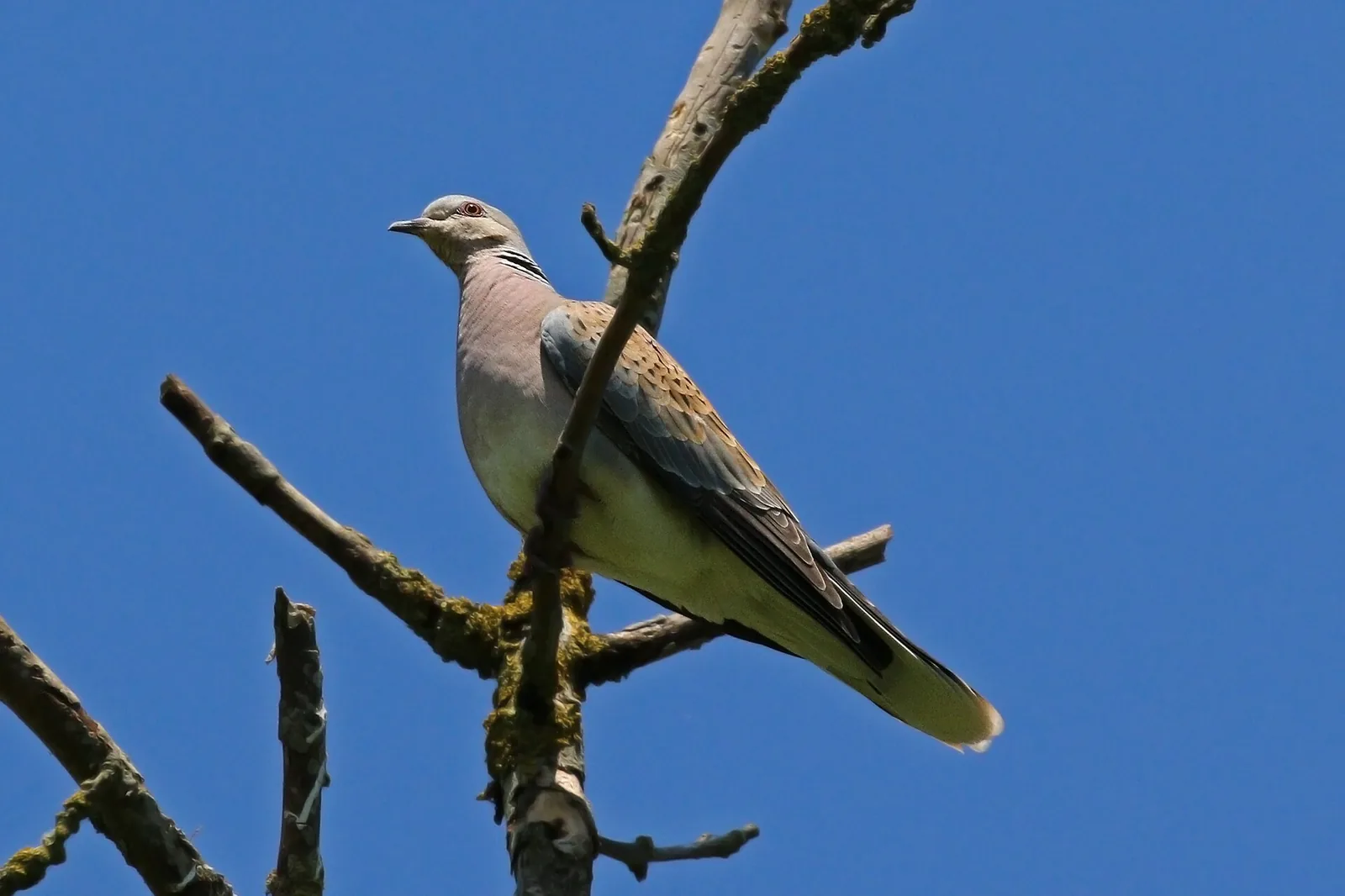
The dove is one of the most familiar birds in the Bible, but the passages don’t all do the same work. Some tell a story. Some are Gospel testimony. One is a charge to the disciples. And some are offering laws.
Noah’s dove
After the flood, Noah first sends a raven, then a dove, “to see if the waters were abated from off the face of the ground” (Genesis 8:8, KJV). The first time, “the dove found no rest for the sole of her foot, and she returned unto him into the ark” (Genesis 8:9, KJV). Seven days later he sends her again:
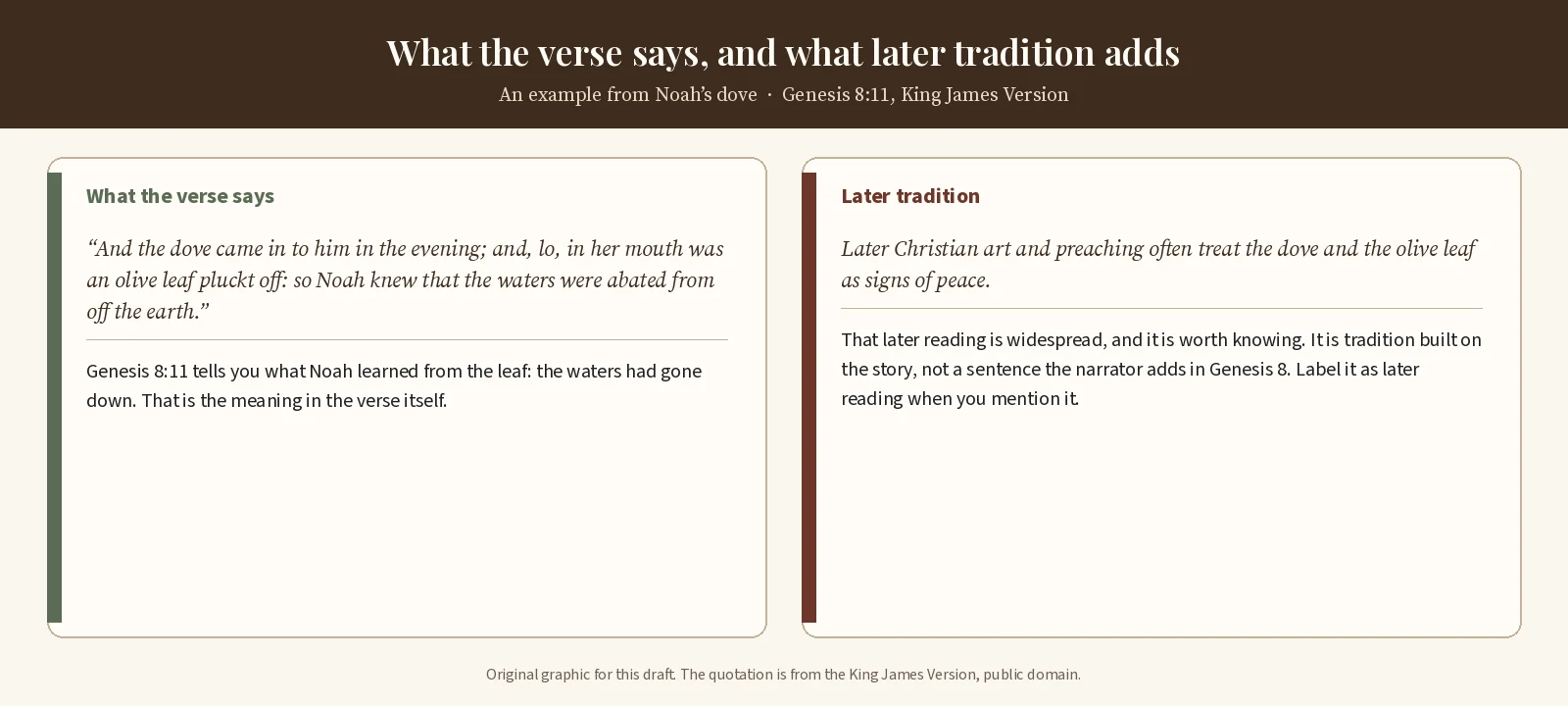
“And the dove came in to him in the evening; and, lo, in her mouth was an olive leaf pluckt off: so Noah knew that the waters were abated from off the earth.” (Genesis 8:11, KJV)
The verse tells you what Noah learned from the leaf: the waters had gone down. Later Christian art and preaching often treat the dove and the olive leaf as signs of peace. That later reading is widespread, and it’s worth knowing. It’s tradition built on the story, though—not a sentence the narrator adds in Genesis 8. After another seven days, Noah sends the dove once more, “which returned not again unto him any more” (Genesis 8:12, KJV).
The Spirit descending like a dove
All four Gospels describe the Spirit coming down at Jesus’ baptism with a comparison to a dove. Matthew writes:
“And Jesus, when he was baptized, went up straightway out of the water: and, lo, the heavens were opened unto him, and he saw the Spirit of God descending like a dove, and lighting upon him.” (Matthew 3:16, KJV)
Mark 1:10 says “the Spirit like a dove descending upon him.” Luke 3:22 says “the Holy Ghost descended in a bodily shape like a dove upon him.” John 1:32 records John the Baptist’s testimony: “I saw the Spirit descending from heaven like a dove, and it abode upon him.” The shared point is the comparison itself. These texts don’t say that every dove you see is the Holy Spirit.
“Harmless as doves”
When Jesus sends the twelve, he says, “Behold, I send you forth as sheep in the midst of wolves: be ye therefore wise as serpents, and harmless as doves” (Matthew 10:16, KJV). Some English translations say “innocent” instead of “harmless.” In the KJV, the comparison is about how the disciples are to conduct themselves, paired with being “wise as serpents.”
The law also names turtledoves and young pigeons as offerings: “then he shall bring his offering of turtledoves, or of young pigeons” (Leviticus 1:14, KJV). Leviticus 5:7 provides the same pair when a person “be not able to bring a lamb.” Luke 2:24 says that after Jesus’ birth, Joseph and Mary came “to offer a sacrifice according to that which is said in the law of the Lord, A pair of turtledoves, or two young pigeons.”
Eagle
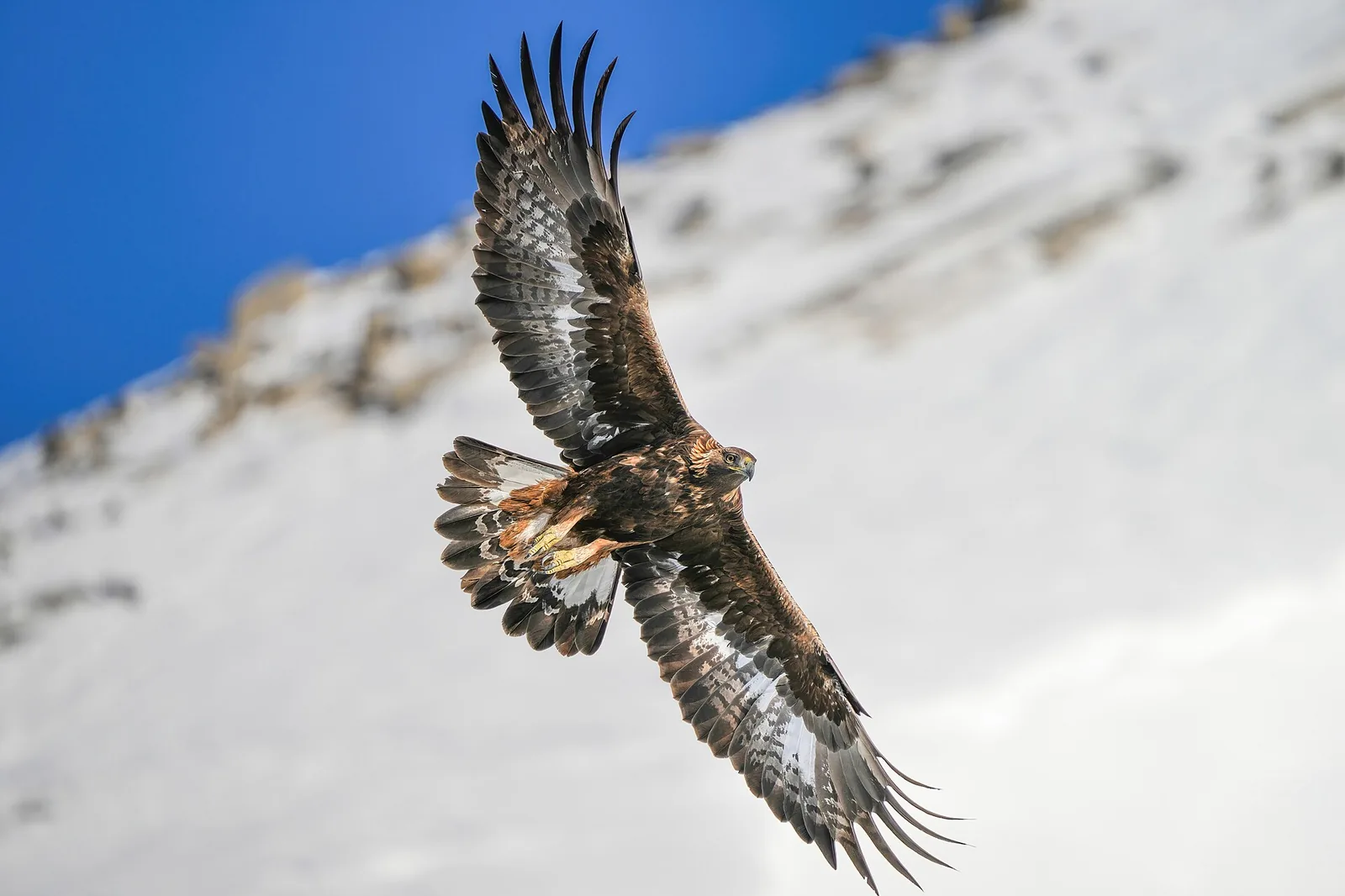
Eagle imagery in these passages is about the Lord’s strength, care, and leading. The verses themselves don’t use a modern slogan about personal freedom.
“But they that wait upon the Lord shall renew their strength; they shall mount up with wings as eagles; they shall run, and not be weary; and they shall walk, and not faint.” (Isaiah 40:31, KJV)
Isaiah’s picture is stamina: people who wait on the Lord getting back the strength to rise, run, and keep walking. That language sits close to an older one. At Sinai, the Lord reminds Israel, “Ye have seen what I did unto the Egyptians, and how I bare you on eagles’ wings, and brought you unto myself” (Exodus 19:4, KJV). Deuteronomy uses a near image for that same leading:
“As an eagle stirreth up her nest, fluttereth over her young, spreadeth abroad her wings, taketh them, beareth them on her wings: So the Lord alone did lead him, and there was no strange god with him.” (Deuteronomy 32:11-12, KJV)
In one place the promise is renewed strength. In the others, the Lord is the one doing the carrying. If a later hymn or sermon adds “freedom” language, that’s a later reading. It should be said that way, not folded back into Isaiah or Exodus as if the chapter had used the word.
Raven
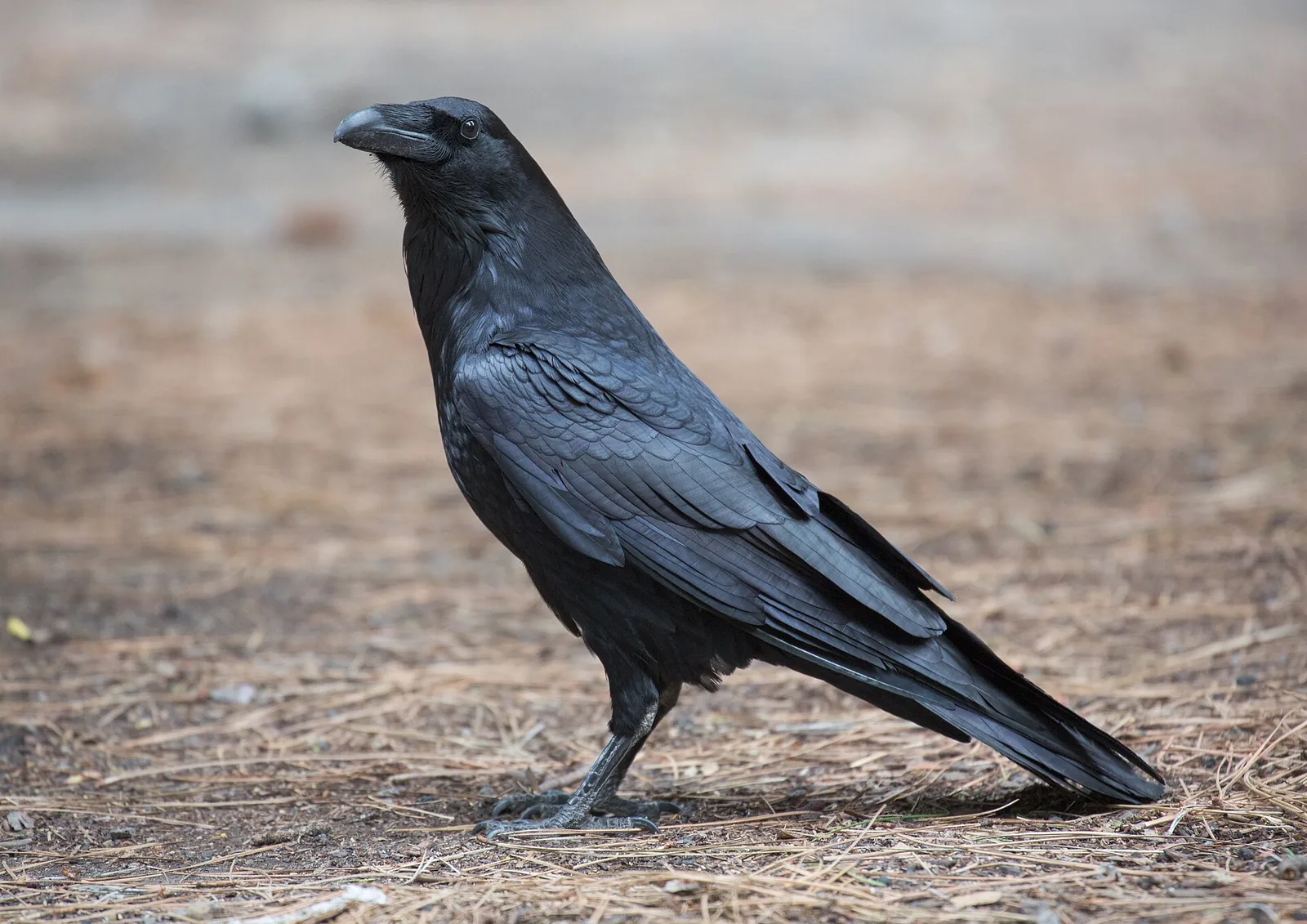
The raven appears first in the flood narrative, before the dove. “And he sent forth a raven, which went forth to and fro, until the waters were dried up from off the earth” (Genesis 8:7, KJV). The text reports what the raven did. It doesn’t pause to moralize about the bird, and this guide won’t invent a contrast the narrator doesn’t draw.
In 1 Kings, the raven is how the Lord provides for Elijah. The Lord tells him, “And it shall be, that thou shalt drink of the brook; and I have commanded the ravens to feed thee there” (1 Kings 17:4, KJV). The next verses say that Elijah dwelt by the brook Cherith, “and the ravens brought him bread and flesh in the morning, and bread and flesh in the evening; and he drank of the brook” (1 Kings 17:6, KJV).
Jesus later points to ravens when he tells his disciples not to be anxious about food: “Consider the ravens: for they neither sow nor reap; which neither have storehouse nor barn; and God feedeth them: how much more are ye better than the fowls?” (Luke 12:24, KJV). Here the raven is an everyday example of God’s feeding, used to argue from the lesser to the greater.
Sparrow
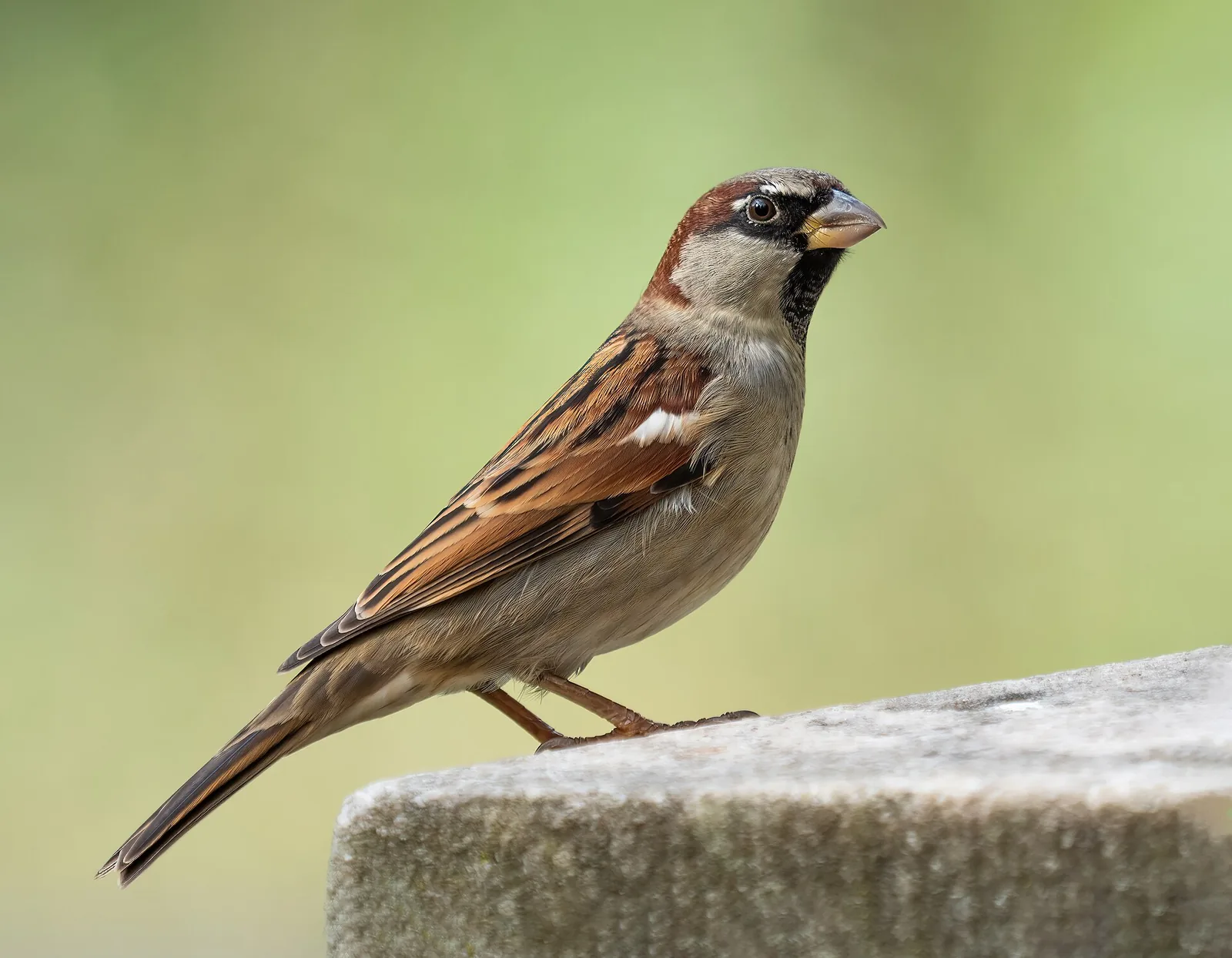
The sparrow passages are among the clearest in this list, because Jesus tells you what the comparison is for:
“Are not two sparrows sold for a farthing? and one of them shall not fall on the ground without your Father. But the very hairs of your head are all numbered. Fear ye not therefore, ye are of more value than many sparrows.” (Matthew 10:29-31, KJV)
Luke records a closely related saying with a different market detail: “Are not five sparrows sold for two farthings, and not one of them is forgotten before God?” and then, “Fear not therefore: ye are of more value than many sparrows” (Luke 12:6-7, KJV). The point is God’s care, and the disciples’ value—not a personality type assigned to the bird.
Psalm 84 uses the sparrow differently, as part of a longing for the Lord’s house: “Yea, the sparrow hath found an house, and the swallow a nest for herself, where she may lay her young, even thine altars, O Lord of hosts, my King, and my God” (Psalm 84:3, KJV).
Hawk and other birds of prey
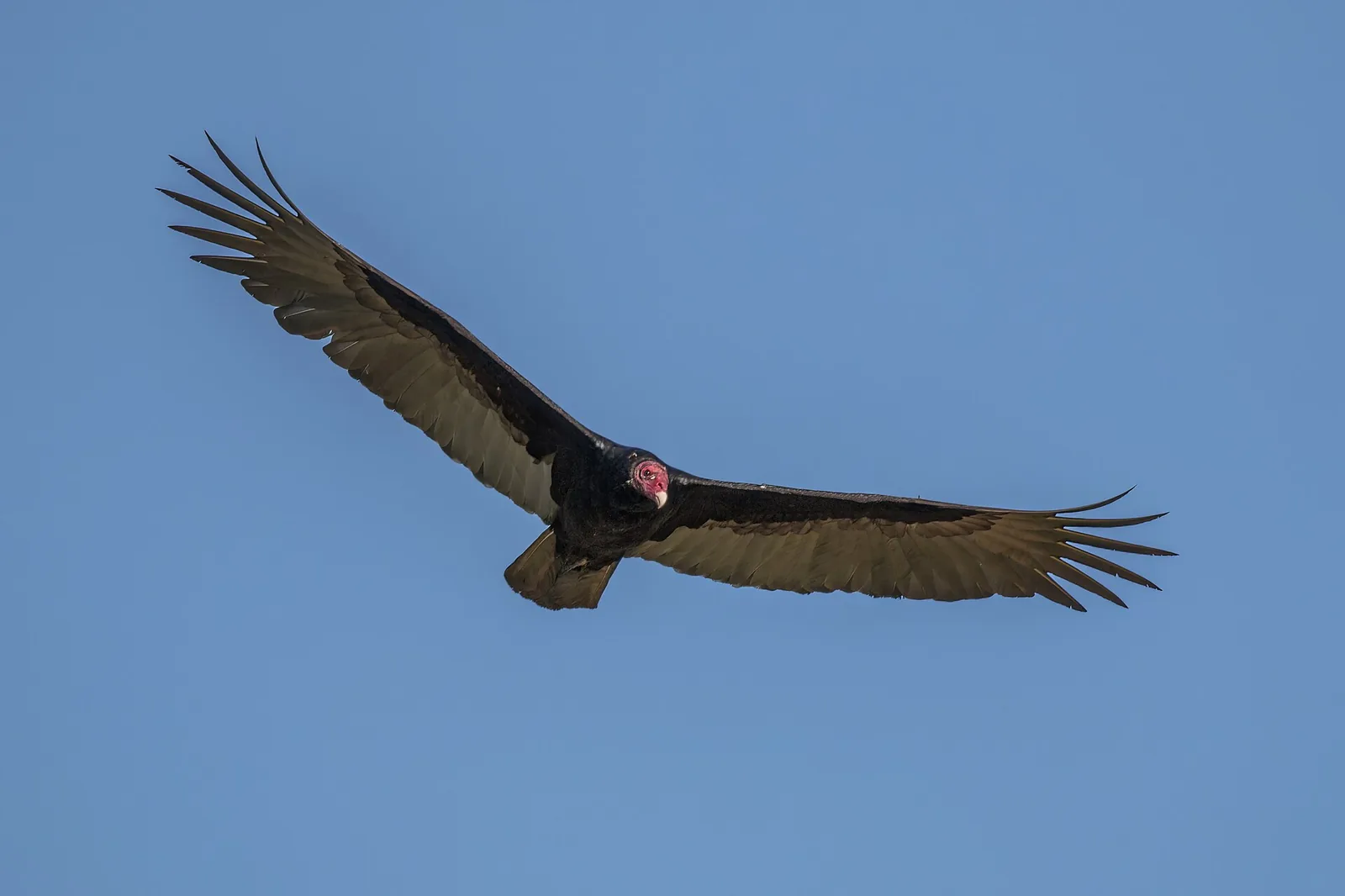
Hawks and vultures already have their own BibleLift studies, and those pages are the place for a closer look. This section only names the verses and sends you there.
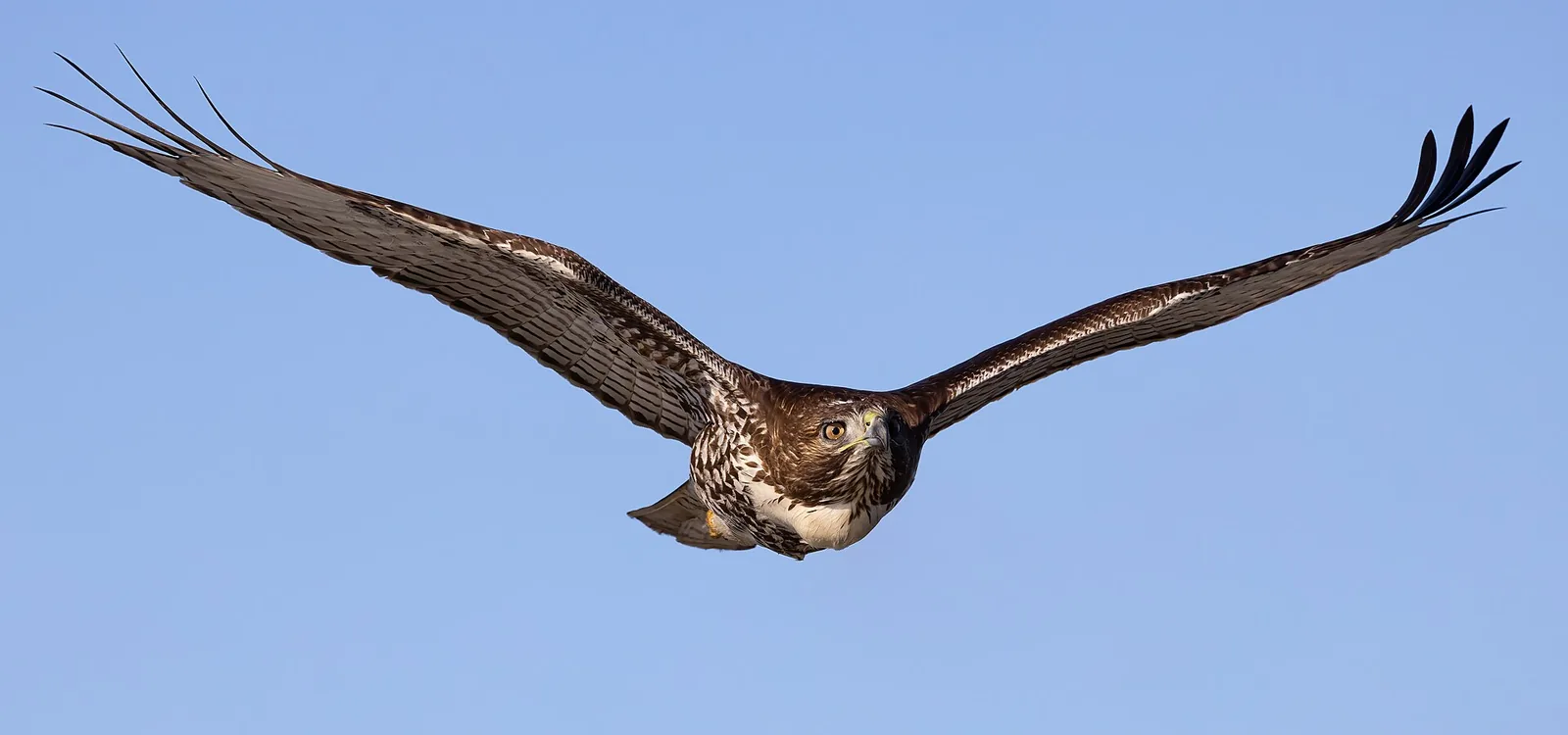
In the Lord’s questions to Job, God says, “Doth the hawk fly by thy wisdom, and stretch her wings toward the south?” (Job 39:26, KJV). The question is about God’s wisdom in the hawk’s flight, set over against human wisdom. It isn’t a character profile of the bird.
In the food laws, hawks and several other raptors are named among birds Israel is not to eat. See Leviticus 11:13-19 and the parallel list in Deuteronomy 14:11-18, which includes “the hawk after his kind” and, in Deuteronomy, “the glede.” Those English names belong to the KJV; another translation may use different bird names in the same verses.
What the law is doing is classifying birds for eating. These verses don’t call the hawk a messenger, or assign it “purity” or “judgment.” For a fuller hawk study, see What Are Hawks Represented In The Bible?. For the vulture, see What Is The Biblical Symbolism Of Vultures?.
How to read bird symbolism without stretching the text
People looking for the spiritual meaning of birds in the Bible often want a tidy list: this bird means peace, that one means luck. Scripture is more particular than that, and more interesting. A simple way to stay honest with the text is:
- Start with the verse. Quote it, or at least name the book, chapter, and verse, and let the passage say what it is doing.
- Name the genre. Law, narrative, psalm, prophecy, and Gospel teaching don’t all work the same way. A food-law list isn’t a parable. A lament’s simile (“I am like an owl of the desert”) isn’t a field guide.
- Separate the biblical text from later tradition. The olive-leaf dove as a peace emblem, or a modern “spirit animal” reading, may be familiar. Say so when you mention them, and don’t pretend Genesis or Jesus used those later categories.
- Don’t turn a bird into an omen chart. The passages cited here don’t offer a luck system, or a key for reading birds as signs in daily life. Where Jesus uses birds, he’s usually teaching about God’s care, or using a comparison his hearers already knew.
If you want a wider view of animals in Scripture, not only birds, start with our overview of the symbolism of animals in the Bible. For animal images in prophetic vision, see animal symbolism in the visions of Ezekiel.
Related studies on BibleLift
You’ll find more of this kind of study in our Biblical Symbolism and Numerology category. The live bird pages to read next are the hawk and vulture posts already linked above. In the same cluster of creature studies, you can also read How Are Spiders Symbolized In Christian Teachings? and What Is The Biblical Meaning Of Praying Mantises?.
The dove, the eagle, the raven, and the sparrow could each use a closer page of their own, staying with the verses gathered here. There’s no date on those yet. A separate “dog Bible meaning” article, if it’s written, would belong with the broader animals overview, not under this birds guide.
Verse quotations in this guide are from the King James Version, which is in the public domain. For another English wording, look up the same book, chapter, and verse in a public Bible text.
FAQ
What do birds symbolize in the Bible?
It depends on the passage. Doves appear in the flood story and at Jesus’ baptism. Sparrows and ravens show up when Jesus teaches about God’s care. Eagles appear in images of strength and leading. Hawks and vultures are named in food-law lists. No single symbol covers every bird.
What is the biblical meaning of birds, in one paragraph?
Birds take their meaning from the verses around them. A dove may be sent to see whether flood waters have gone down, or may be the comparison used when the Spirit descends on Jesus. An eagle may picture the Lord’s leading, or the renewed strength of those who wait on him. Ravens may feed Elijah, or be an example of God’s feeding. Sparrows may show that God notices even a small bird’s fall. Other birds appear in food laws or in poetry. Start with the verse, not with a catch-all meaning.
What does a dove represent in the Bible?
In Genesis 8, Noah’s dove brings back an olive leaf, and Noah knows the waters have abated. In Matthew 3:16 and the parallel baptism accounts, the Spirit descends “like a dove.” In Matthew 10:16, Jesus says “harmless as doves.” Turtledoves appear as offerings in Leviticus 1:14 and 5:7, and in Luke 2:24.
What does an eagle represent in the Bible?
Isaiah 40:31 says those who wait on the Lord “shall mount up with wings as eagles.” Exodus 19:4 and Deuteronomy 32:11-12 use eagle imagery for the Lord carrying and leading Israel. Those verses are about strength and care, not a later slogan about freedom.
What does a raven represent in the Bible?
Noah sends a raven in Genesis 8:6-7. In 1 Kings 17:4-6, ravens feed Elijah at the brook Cherith. In Luke 12:24, Jesus says to consider the ravens, “and God feedeth them.”
What does a sparrow represent in the Bible?
In Matthew 10:29-31 and Luke 12:6-7, Jesus uses sparrows to teach that God doesn’t forget them, and that people are “of more value than many sparrows.” Psalm 84:3 pictures a sparrow near the Lord’s altars.
What do hawks mean in the Bible?
Job 39:26 asks whether the hawk flies by human wisdom. Leviticus 11:16 and Deuteronomy 14:15 name “the hawk after his kind” among birds not to be eaten. For a longer study, see What Are Hawks Represented In The Bible?.
Are birds in the Bible “good luck” or omens?
The verses cited here don’t present birds as good-luck charms, or as a system for reading omens. Where Jesus talks about sparrows or ravens, he’s teaching about God’s care, not offering a method for interpreting birds you see in daily life.
What is the difference between a biblical meaning and later Christian tradition?
A biblical meaning is what a cited passage actually says—for example, that Noah knew the waters were abated when the dove brought an olive leaf (Genesis 8:11). Later tradition may treat the dove and olive leaf as an emblem of peace. That reading is worth knowing, but it shouldn’t be treated as a sentence in the verse.
Where should I start if I want to study one bird more deeply?
Start with the verses in the table above, in a public Bible text, and read the surrounding chapter. Then use the live BibleLift pages for hawks and vultures, or the animals in the Bible overview. Dove, eagle, raven, and sparrow studies would be natural next pages; they aren’t scheduled yet.
Image credits: Featured image: Photo: Charles J. Sharp / Sharp Photography (sharpphotography.co.uk), CC BY-SA 4.0, via Wikimedia Commons. A title bar was added for this article; this derivative is also CC BY-SA 4.0.